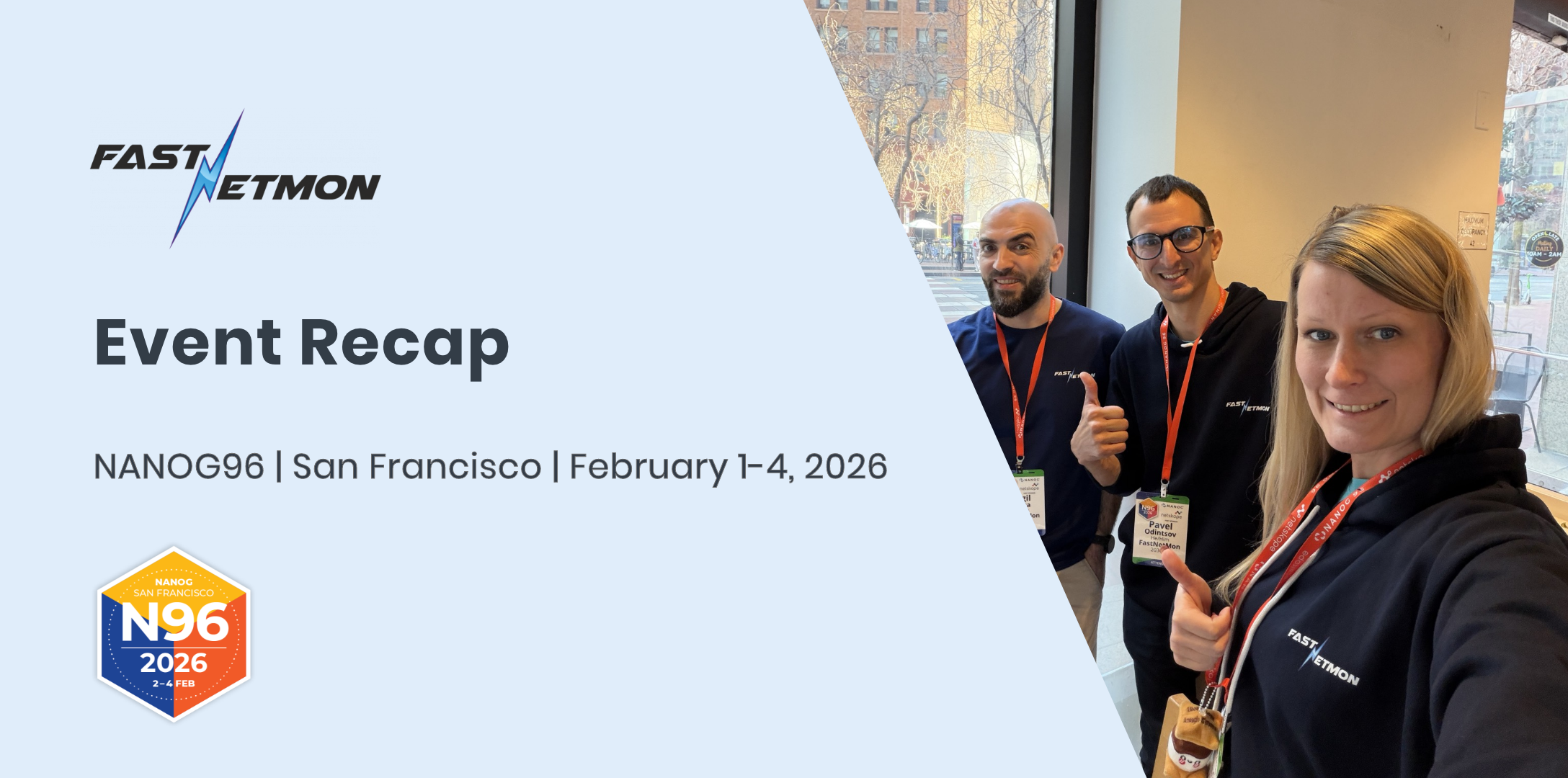
FastNetMon attended NANOG 96, held 2–4 February 2026 in San Francisco, joining over 800 network engineers, operators, and architects for three days of technical talks, hallway debates, and community catch-ups.
As always, NANOG delivered exactly what makes it unique. The conference combined deeply practical presentations with open sharing of operational experience, alongside the informal conversations that often turn into real production changes months later. The spotlight topic for NANOG 96 was AI and network infrastructure, and it was visible across keynotes, technical sessions, and countless hallway discussions about traffic patterns, telemetry requirements, and how AI workloads are already changing network capacity and design assumptions.
For FastNetMon, the biggest moment of the week was seeing FastNetMon founder, Pavel Odintsov, present to the NANOG community. The previous talk he gave at NANOG was in 2023 (about Network Telemetry on Modern Routers), and it was a good time to get back on the stage again!
FastNetMon presentation at NANOG 96
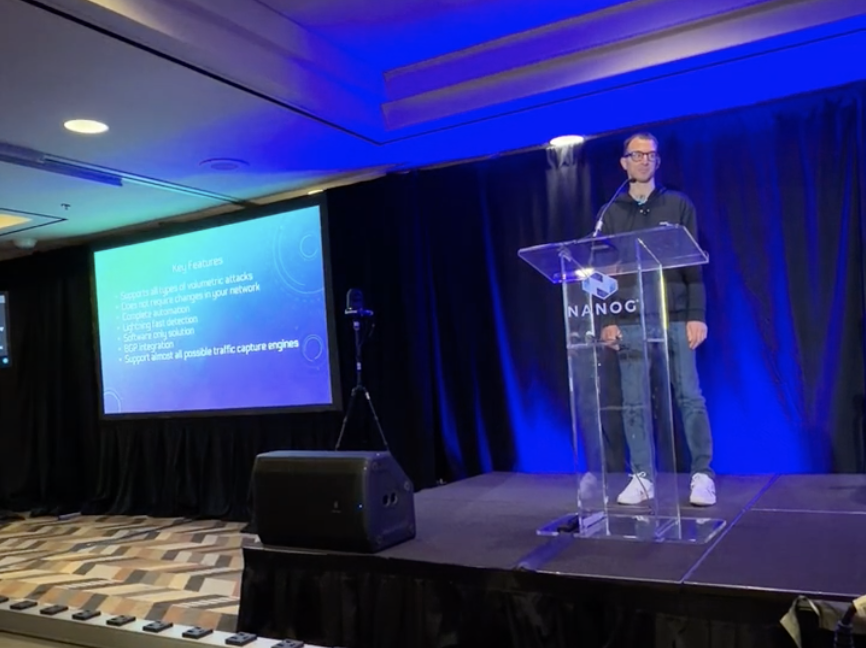
On day three of NANOG 96, Pavel presented FastNetMon Community: an open source tool for DDoS detection. The session focused on how FastNetMon is actually used in production networks, rather than theoretical detection models. The talk walked through deployment patterns seen across networks, practical detection approaches that hold up under real traffic conditions, and lessons learned from operators running FastNetMon at scale. It also highlighted how the open source community continues to influence the direction of the project.
You can download the slides to explore the technical details further.
One of the strongest aspects of presenting at NANOG is always the discussion afterwards. The questions and feedback came directly from engineers running large networks in production, which is exactly the environment FastNetMon is built for.
What stood out technically at NANOG 96
If there was one consistent theme across NANOG 96, it was how quickly long-standing assumptions about network traffic are changing. AI workloads are already reshaping how networks behave. Operators are seeing significantly higher east-west traffic density inside data centres, traffic bursts that are harder to predict using historical baselines, and a much stronger dependency on real-time telemetry to understand what is happening across infrastructure. There was also repeated emphasis on the need for faster detection and response cycles when something goes wrong, whether that is congestion, misconfiguration, or active attack traffic.
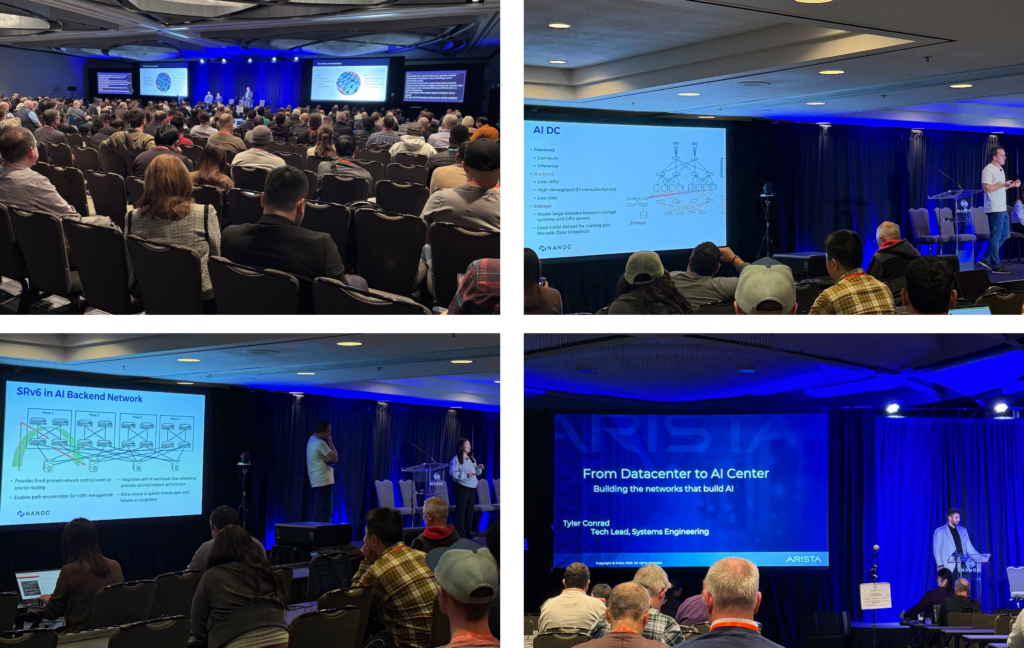
For traffic visibility and DDoS detection, these shifts are no longer future concerns. They are already visible in production environments and are directly influencing how operators think about monitoring and detection architecture.
Routing security and BGP remained, as expected, a central part of the conversation at NANOG 96. Multiple sessions and hallway discussions focused on improving observability and access to data, alongside very practical conversations about RPKI adoption in real operational environments. There was also strong interest in recent routing incidents and what they revealed about failure detection, propagation behaviour, and recovery patterns in modern large-scale networks. As is typical for NANOG, some of the most useful knowledge sharing happened outside formal presentations, where operators exchanged real operational experience rather than theory.
The hallway track and operator conversations
We had a full calendar of meetings throughout NANOG 96 with service providers, hosting companies, IXPs, and infrastructure vendors. The discussions covered everything from DDoS detection strategy and mitigation workflows to routing security and the realities of operating large distributed networks today.
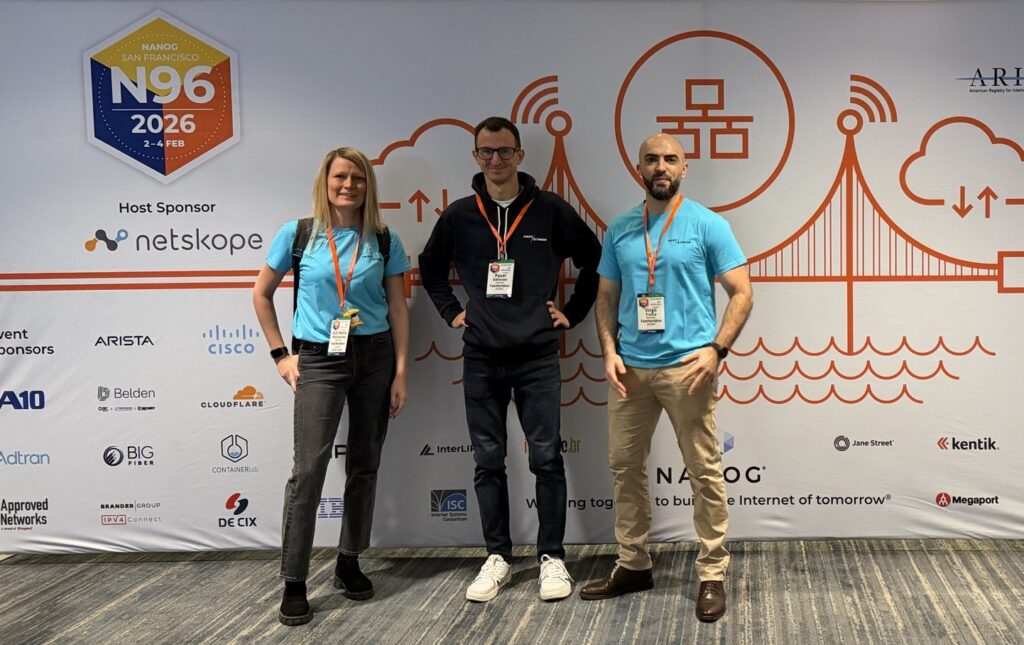
Just as importantly, NANOG gave us the opportunity to reconnect with long-time friends in the community and meet many new teams evaluating how to improve traffic visibility and automated detection. These conversations are often where we learn the most about how networks are actually evolving in the wild.
Community highlights from NANOG 96
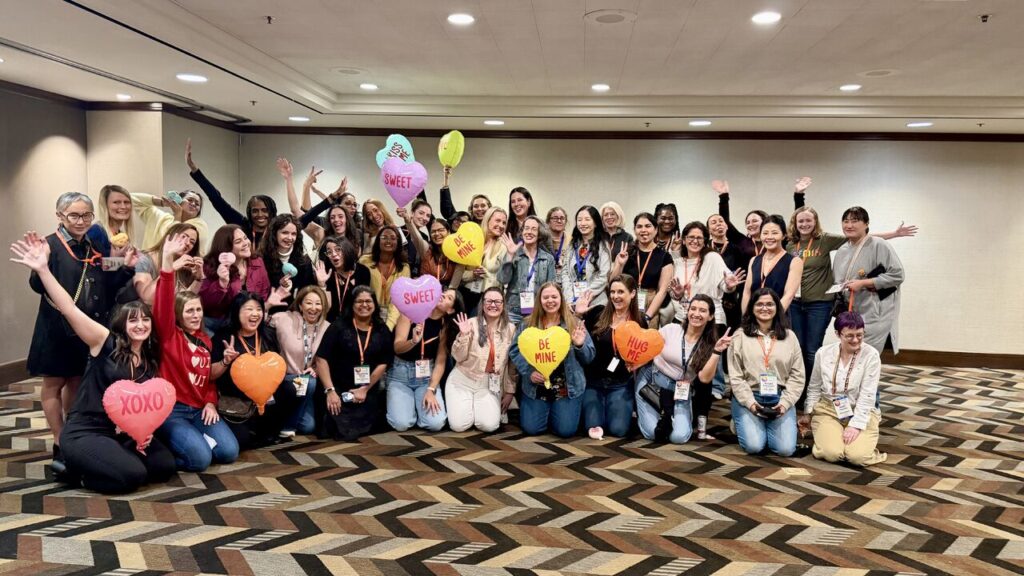
The Women in Tech mixer on Sunday evening stood out as particularly welcoming and energetic. It set a strong tone before the conference even started and created space for meaningful conversations across different parts of the community. The evening continued with sponsor-hosted socials, including the Megaport event, where people had a chance to reconnect in a relaxed environment before the technical schedule began.
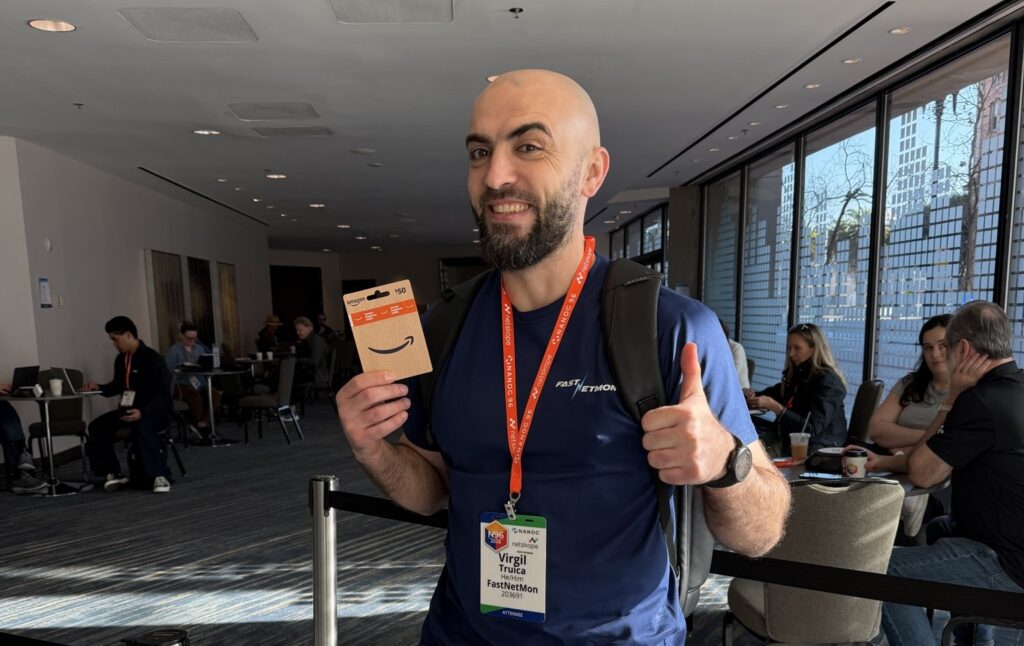
Tuesday evening’s Beer n’ Gear once again delivered the classic NANOG mix of technical conversations and community atmosphere. This year it also came with a fun surprise for us, as Virgil Truica from the FastNetMon team won one of the prizes, which made the evening even more memorable.
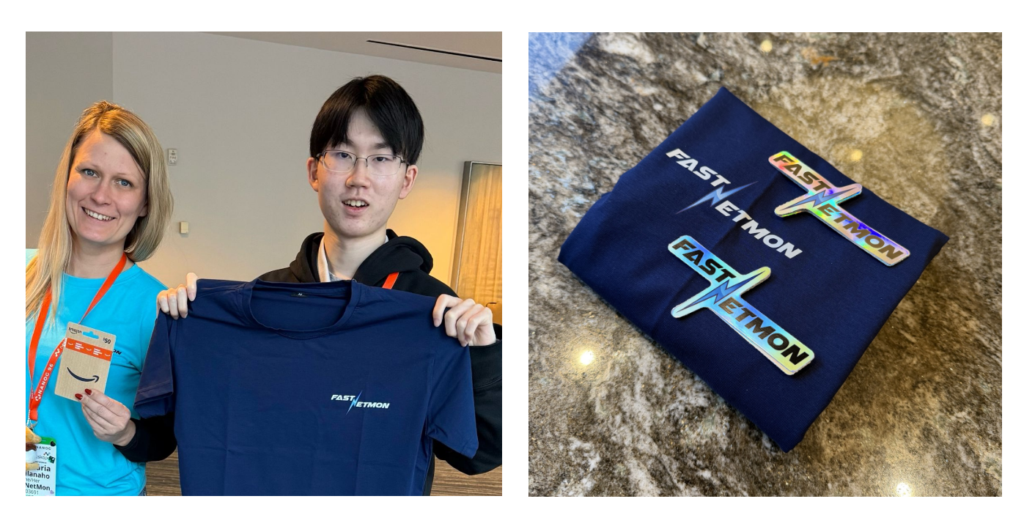
On Wednesday, we organised a small treasure hunt across the venue. Participants searched for hidden FastNetMon merch placed around the conference space, and the winner received FastNetMon gear together with an Amazon gift card. It was a simple idea, but it added some extra energy to an already lively conference environment and showed once again how much people enjoy a bit of friendly competition when networking swag is involved.
NANOG week beyond the conference rooms
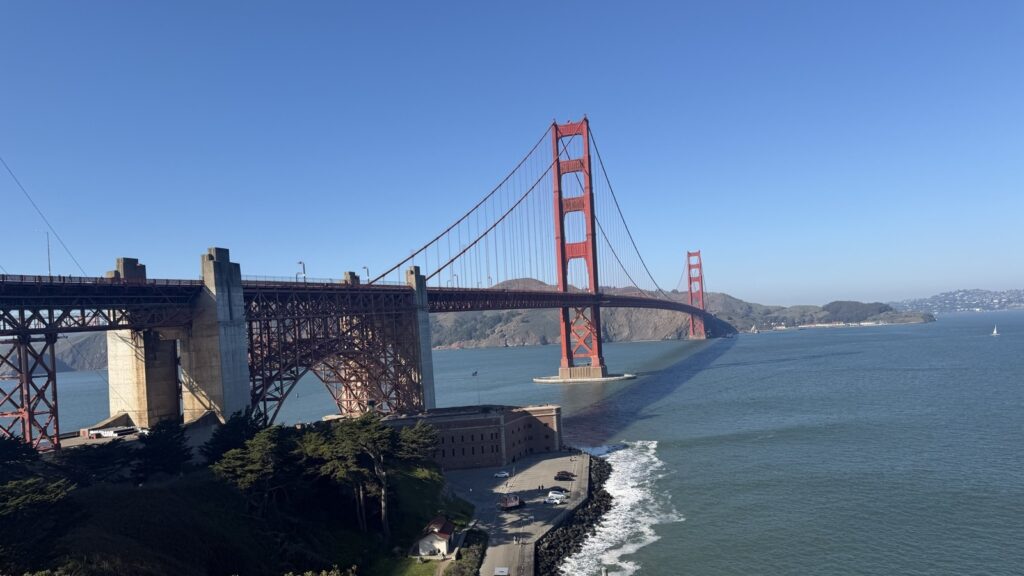
San Francisco delivered unusually generous sunny weather for early February, which made the week even more enjoyable. Outside conference hours, the team had a chance to see some of the city’s iconic sights. While NANOG schedules are always busy, having a bit of time to experience the city is always a welcome bonus during event travel.
See you at the next NANOG
If you met us at NANOG 96, thank you for the conversations, feedback, and ideas you shared with us. If you missed Pavel’s talk, we highly recommend watching the recording and reviewing the slides to see how FastNetMon continues to evolve together with the operator community. If you want to talk about FastNetMon deployments, DDoS detection strategy, or traffic visibility challenges, we are always happy to continue the conversation.
We are looking forward to seeing many of you again at the next event!