Botnet Explained: What Is a Botnet and How Does It Work?
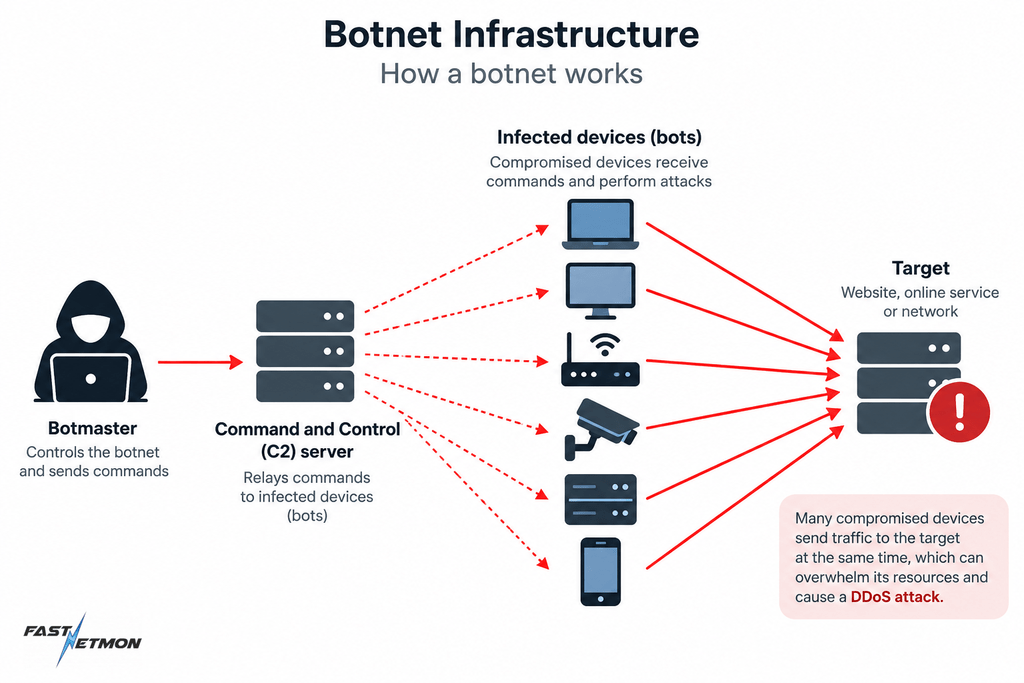
A botnet is a network of Internet-connected devices that have been compromised and can be remotely controlled as a group. Each infected device is called a bot, while the person or group controlling the network is commonly known as a botmaster, bot herder, or Botnet Operator.
Botnets can include computers, servers, routers, cameras, and other Internet of Things (IoT) devices. Attackers use them to perform coordinated activities at scale, including DDoS attacks, spam campaigns, credential attacks, malware distribution, and other malicious activity.
In a Distributed Denial of Service (DDoS) attack, a botnet can instruct thousands of compromised devices to send traffic toward the same target simultaneously, potentially overwhelming the target's network or infrastructure.
Botnet explained in 30 seconds
A botnet typically works in five stages:
- Infection: An attacker compromises Internet-connected devices using malware, weak credentials, software vulnerabilities, or other security weaknesses.
- Connection: The infected devices connect to the botnet's command-and-control infrastructure or other bots in the network.
- Control: The botmaster sends instructions to compromised devices.
- Execution: The bots perform coordinated activities such as generating DDoS traffic, sending spam, or scanning for vulnerable systems.
- Expansion: Some botnets continuously search for and infect additional devices, allowing the network to grow.
The power of a botnet comes from scale and distribution. An attacker can coordinate large numbers of devices across different networks and geographical locations as if they were a single system.
How does a botnet work?
A botnet consists of compromised devices that can receive and execute instructions from an attacker.
The exact architecture varies, but botnets generally require a way for the attacker to communicate with the infected devices. This is known as command and control (C2 or C&C).
Two common botnet architectures are:
- Centralized command and control: Bots communicate with one or more central servers controlled by the botmaster. This makes the botnet relatively straightforward to operate, but disrupting the C2 infrastructure can interfere with the botnet.
- Peer-to-peer (P2P): Bots communicate with each other rather than relying entirely on a central server. This decentralized design can make the botnet more difficult to disrupt.
Once connected, infected devices wait for instructions and may continue to function normally from the owner's perspective.
The owner of a compromised router, camera, server, or computer may therefore have no obvious indication that their device is participating in a botnet.
How do devices become part of a botnet?
Attackers build botnets by compromising large numbers of Internet-connected devices.
Common infection methods include:
- Default or weak passwords
- Unpatched software vulnerabilities
- Outdated device firmware
- Malware and malicious downloads
- Phishing and social engineering
- Exposed Internet-facing services
- Automated scanning for vulnerable devices
IoT devices such as routers and Internet-connected cameras are particularly attractive targets because they are widely deployed and may operate for years without firmware updates or security maintenance.
Some botnet malware also attempts to spread automatically. After compromising one device, it can scan the Internet for other vulnerable systems and attempt to infect them.
This allows a botnet to grow with relatively little manual involvement from its operator.
What are botnets used for?
Botnets can perform many types of malicious activity at scale.
Common uses include:
- DDoS attacks: Flooding networks, websites, or online services with traffic
- Spam and phishing: Sending large volumes of malicious email or messages
- Credential attacks: Automating login attempts against online accounts
- Malware distribution: Delivering additional malicious software
- Click and advertising fraud: Generating artificial clicks or traffic
- Cryptocurrency mining: Using compromised computing resources to mine cryptocurrency
- Proxying malicious traffic: Routing an attacker's activity through compromised devices
- Network scanning: Searching the Internet for additional vulnerable systems
Not every botnet is therefore a DDoS botnet. DDoS is one of several ways attackers can use a network of compromised devices.
How are botnets used in DDoS attacks?
Botnets are particularly effective for Distributed Denial of Service attacks because they allow an attacker to generate traffic from many sources simultaneously.
During a botnet-powered DDoS attack:
- The botmaster sends an attack command to the botnet.
- Large numbers of compromised devices begin sending traffic or requests toward the target.
- The combined traffic consumes network bandwidth or infrastructure resources.
- Legitimate users have to compete with the attack traffic.
- The targeted service may become slow, unstable, or completely unavailable.
Depending on the botnet and attack technique, bots may generate large numbers of TCP packets, UDP packets, or application-layer requests.
Because attack traffic is distributed across many devices, networks, and locations, blocking a single source IP address does little to stop the overall attack.
This distributed structure is what makes botnets particularly useful for large-scale DDoS attacks.
What are some examples of botnets?
Several botnets have become well known because of their scale or their use in DDoS attacks.
Examples include:
- Mirai
- Mēris
- Reaper
- Aquabot
- AIRASHI
Mirai is one of the best-known examples of an IoT botnet. It spread by compromising Internet-connected devices using common or default credentials, demonstrating how large numbers of poorly secured devices could be coordinated for powerful DDoS attacks.
Botnet families and variants continue to change, but many rely on the same underlying opportunity: large numbers of vulnerable Internet-connected devices that attackers can compromise and remotely control.
Why are botnets difficult to stop?
Botnets can be difficult to eliminate because their infrastructure is distributed across many devices and networks.
Several factors contribute to their persistence:
- Large numbers of vulnerable devices remain connected to the Internet.
- Compromised devices may continue working normally, so owners do not realize they are infected.
- Botnet malware can automatically scan for new victims.
- Peer-to-peer architectures can reduce reliance on centralized infrastructure.
- Botnet source code can be copied, modified, and reused.
- Attackers can rebuild infrastructure after a disruption.
- Botnets can be rented or sold to other attackers.
This means taking down one command-and-control server or group of bots does not necessarily eliminate the underlying malware or prevent new variants from appearing.
How can botnets be detected and stopped?
Defending against botnets requires action at both the device and network level.
For device owners, basic security measures can reduce the likelihood of infection:
- Change default usernames and passwords.
- Install software and firmware updates.
- Disable unnecessary Internet-facing services.
- Use network segmentation where appropriate.
- Remove or replace devices that no longer receive security updates.
At the network level, operators can monitor traffic for signs of compromised devices or coordinated attacks.
Potential indicators include:
- Connections to known malicious infrastructure
- Unusual DNS activity
- Unexpected outbound connections
- Abnormal scanning behavior
- Sudden increases in packets or traffic
- Large numbers of devices exhibiting similar traffic patterns
During a botnet-powered DDoS attack, network operators can use DDoS detection systems such as FastNetMon to analyze traffic in real time and identify abnormal traffic patterns.
Once an attack is detected, mitigation can be automated using techniques such as BGP FlowSpec, BGP blackholing (RTBH), or traffic redirection to a DDoS scrubbing center.
Frequently asked questions about botnets
What does botnet mean?
The word botnet combines the words bot and network. It describes a network of compromised devices that can be remotely controlled and coordinated.
What is a bot in a botnet?
A bot is an individual device that has been compromised and added to a botnet. Bots may include computers, servers, routers, cameras, and other Internet-connected devices.
Compromised devices in a botnet are also sometimes called zombies.
What is a botmaster?
A botmaster, also called a bot herder, is the person or group that controls a botnet and issues instructions to its compromised devices.
Are all botnets used for DDoS attacks?
No. DDoS is only one use for a botnet.
Botnets can also be used for spam, phishing, credential attacks, malware distribution, advertising fraud, cryptocurrency mining, proxying malicious traffic, and other automated activities.
What is a DDoS botnet?
A DDoS botnet is a network of compromised devices used to generate a Distributed Denial of Service attack.
The botmaster instructs many bots to send traffic or requests toward the same target simultaneously. The combined traffic can overwhelm the target's bandwidth, network infrastructure, or application resources.
Can a device be part of a botnet without its owner knowing?
Yes. Botnet malware often attempts to operate without disrupting the device's normal functions.
A compromised router, camera, server, or computer may therefore continue working normally while communicating with botnet infrastructure or participating in malicious activity in the background.